If you are looking for a Chattanooga-area rental market with a lower entry point than the city average, Lookout Valley deserves a closer look. This neighborhood offers a mix of affordability, commuter access, and outdoor appeal that can support steady long-term rental demand. If you want to understand where the opportunities may be and what risks to watch, this guide will help you evaluate Lookout Valley with clearer expectations. Let’s dive in.
Why Lookout Valley Draws Investor Attention
Lookout Valley sits on Chattanooga’s southwest side and is identified by the city as part of South Chattanooga. Planning documents also describe it as one of Chattanooga’s suburban neighborhoods, which matters because suburban housing patterns often support single-family and small-scale rental strategies more than dense short-term inventory.
For many buyers, the biggest draw is the lower cost basis. Zillow shows the average home value in Lookout Valley at $229,705, compared with $314,306 citywide in Chattanooga. That gap gives some investors more room to enter the market, though it does not guarantee stronger returns on its own.
According to Zillow’s Lookout Valley home value data, neighborhood values were down 7.2% year over year at the time of review. That kind of shift can create opportunity for buyers who are focused on cash flow and long-term positioning rather than short-term appreciation alone.
Demand Drivers in Lookout Valley
Commute Access Supports Daily Convenience
One of Lookout Valley’s practical advantages is location. The Plan Chattanooga Area 4 report places this part of South Chattanooga along the I-24 corridor and notes that South Chattanooga is the second most accessible area by existing or future high-frequency transit after downtown.
For renters, that kind of access can matter just as much as the home itself. Easier travel options can widen the renter pool and support demand from households that value convenience in their day-to-day routine.
Outdoor Access Adds Lifestyle Appeal
Chattanooga’s outdoor reputation is not just branding. In 2025, the city announced it became the first National Park City in North America, and the nearby Lookout Mountain unit includes more than 30 miles of trails.
That access gives Lookout Valley a real quality-of-life advantage. For many renters, being close to trails, parks, and scenic outdoor areas can make a home more appealing and help support tenant interest over time.
Affordability Remains a Local Priority
The Area 4 planning report shows an estimated population of 14,781, median household income of $33,107, and 31.4% of households with children under 18. The same report also notes that affordability, transportation, and parks and greenways came up repeatedly in community input.
That does not mean every rental in Lookout Valley should be positioned the same way. It does suggest, however, that housing with practical pricing and everyday functionality may align well with what many local renters are looking for.
What the Rental Inventory Looks Like
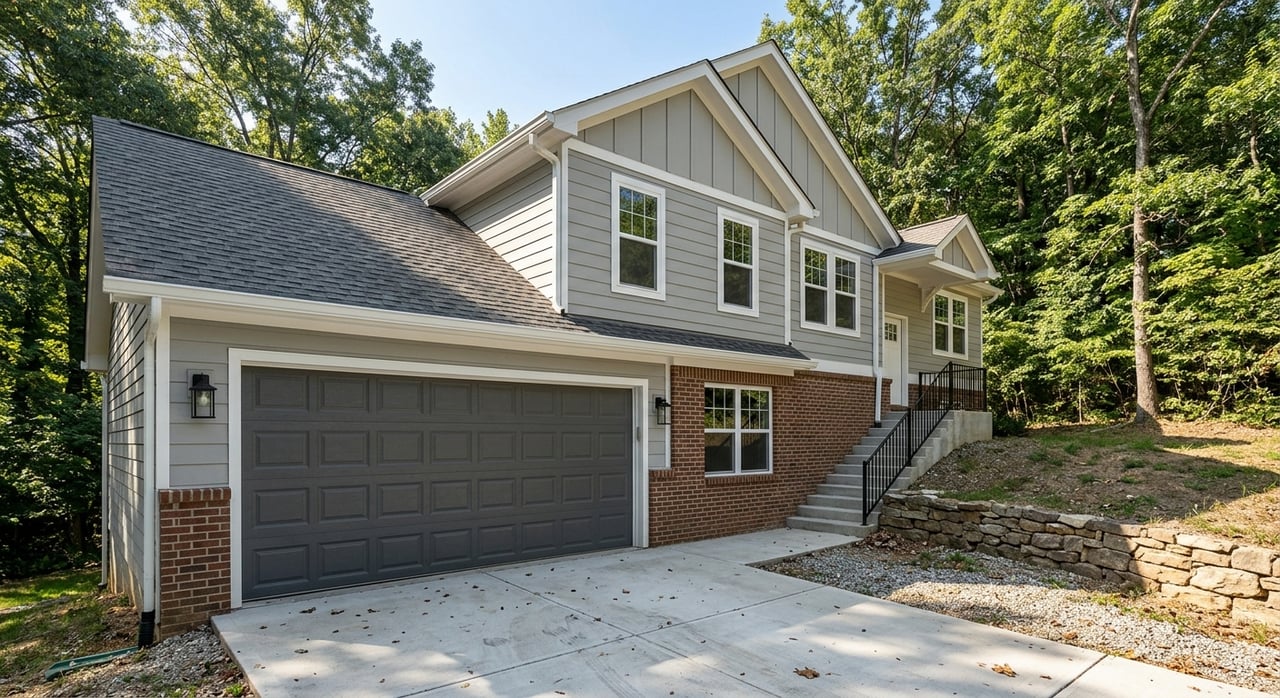
Lookout Valley appears to be a house-heavy rental submarket with a smaller share of attached and small-multifamily properties. Current Zillow listings reviewed for this article included a 1-bedroom apartment at $950, a 3-bedroom house at $1,800, and another 3-bedroom house at $2,150. Nearby listings also included a 2-bedroom townhouse at $1,350, a 3-bedroom townhouse at $2,200, and a 4-bedroom house at $1,885.
These examples show a wide range in pricing, which tells you something important. In Lookout Valley, rental performance may depend more on unit type, condition, size, and presentation than on neighborhood name alone.
There is also evidence of small multifamily stock in the area. A separate Zillow example highlighted a 1973 quadplex on Elder Mountain Road, confirming that smaller multifamily properties exist even if they are not the dominant inventory type.
What the Numbers Suggest
Citywide, Zillow estimates Chattanooga’s average rent at $1,499 per month. Some active Lookout Valley listings are below that number, while others are above it, reinforcing the need to underwrite each property individually rather than rely on one broad average.
Using the current examples and Lookout Valley’s average home value, rough gross rent-to-value figures can vary quite a bit:
- $950/month on a $229,705 basis is about 5.0% gross annual rent-to-value
- $1,350/month is about 7.1% gross annual rent-to-value
- $1,800/month is about 9.4% gross annual rent-to-value
These are only rough gross figures. They do not include taxes, insurance, vacancy, repairs, capital expenses, or management costs, so they should be treated as a starting point rather than a final investment conclusion.
Carrying Costs to Watch
A lower purchase price helps, but your monthly and annual costs still shape real performance. Chattanooga states that residential property is assessed at 25% of appraised value and taxed at $1.93 per $100 of assessed value, with bills issued October 1 and due by the last day of February.
Based on Lookout Valley’s average home value of $229,705, the city tax portion alone would be about $1,108 per year, before Hamilton County taxes and other ownership costs. You can review the city’s property tax information when building your estimates.
For investors comparing neighborhoods, this is a good reminder that purchase price is only one part of the equation. A property that looks attractive at first glance still needs a realistic budget for taxes, maintenance, turnover, and reserves.
Long-Term Rentals May Offer the Clearest Fit
For many buyers, Lookout Valley appears to line up best with a long-term rental strategy. The area’s suburban character, affordability, commuter access, and family-oriented housing mix all support that direction.
Short-term rental rules in Chattanooga are a major decision point. The city requires short-term vacation rental certificates to be renewed annually, requires a City of Chattanooga business license, and beginning January 1, 2026, requires certificates to be posted in the rental. The city also distinguishes between homestay and absentee short-term rentals, with absentee use limited to certain commercial or higher-intensity zones or parcels of at least 20 acres. You can review the full short-term rental rules here.
That means many standard residential purchases in Lookout Valley may be better evaluated as long-term rentals unless zoning and parcel characteristics clearly support another approach. Tennessee also changed tax treatment for short stays, with the first 30 days of occupancy in a short-term rental unit subject to local occupancy tax beginning July 1, 2025, according to the Tennessee Department of Revenue.
Why Property Condition Matters Here
Plan Chattanooga describes much of Area 4 as below average in real estate market conditions and notes that new construction and renovation activity have been sparse outside St. Elmo. That does not mean you should avoid the area. It does mean block-by-block due diligence is especially important.
Older homes can present value-add opportunities, but they also bring more maintenance risk. Chattanooga’s code enforcement standards cover minimum housing standards, structure maintenance, litter and overgrowth, inoperable vehicles, and grass and weeds kept below 10 inches.
If you are buying an older property, you will want a close look at deferred maintenance, systems age, exterior condition, drainage, and ongoing compliance needs. Strong underwriting in Lookout Valley should include both renovation potential and realistic upkeep costs.
Management Can Shape the Outcome
In a neighborhood like Lookout Valley, consistent property management is not just a convenience. It is part of protecting the asset and supporting long-term performance.
Chattanooga’s rental-program guidance identifies screening, rent collection, inspections, maintenance, recordkeeping, and emergency response as core management responsibilities. The city’s rental repair and renovation program materials also reinforce the importance of being current on taxes and avoiding active code violations.
For small-scale investors, that can be the difference between a property that feels manageable and one that becomes reactive. With the right systems in place, you are better positioned to reduce turnover stress, respond to maintenance issues quickly, and keep cleaner records over time.
What Makes a Strong Buy in Lookout Valley
Not every property in Lookout Valley will offer the same opportunity. In general, the most promising rental candidates may share a few traits:
- Practical floor plans that fit long-term renters
- Reliable commuter access near key travel routes
- Solid baseline condition or clear value-add potential
- Pricing that supports cash-flow analysis after real expenses
- Manageable maintenance needs for the age of the home
You should also pay attention to neighborhood-level context. Since market strength can vary by block, local knowledge matters when comparing one street to another.
A Smart Approach for Investors
Lookout Valley may be especially appealing if you want a Chattanooga-area rental property with a lower entry point and a long-term hold strategy. The neighborhood’s affordability, accessibility, outdoor appeal, and house-heavy inventory create a practical setup for many landlords.
At the same time, success here usually comes from careful analysis rather than broad assumptions. You will want to verify rents, review zoning, understand carrying costs, inspect property condition closely, and make sure the management plan fits the asset.
If you are exploring rental property opportunities in Lookout Valley and want local guidance from acquisition through ongoing management, connect with Tonjia Landreth. Bridge City Realty offers the local insight and hands-on support that can help you move with more confidence.
FAQs
What types of rental properties are common in Lookout Valley?
- Lookout Valley appears to be mostly a house-heavy rental market, with some townhomes, apartments, and small multifamily properties mixed in.
What is the average home value in Lookout Valley?
- Zillow shows Lookout Valley’s average home value at $229,705, which is below Chattanooga’s citywide average of $314,306 at the time of review.
Are short-term rentals easy to operate in Lookout Valley?
- Not always. Chattanooga’s short-term rental rules limit absentee rentals to certain zones or large parcels, so many standard residential properties may fit better as long-term rentals.
What rental rates are currently showing in Lookout Valley?
- The reviewed listings ranged from about $950 for a 1-bedroom apartment to about $2,150 for a 3-bedroom house, with other nearby examples in between.
Why does property management matter for Lookout Valley rentals?
- Ongoing management helps with tenant screening, rent collection, inspections, maintenance, recordkeeping, and code compliance, all of which can affect long-term property performance.
Is Lookout Valley a good place to look for long-term rentals?
- It may be a solid option for long-term rental investors who want a lower entry point, but each property should be evaluated carefully for condition, location, expenses, and local demand.