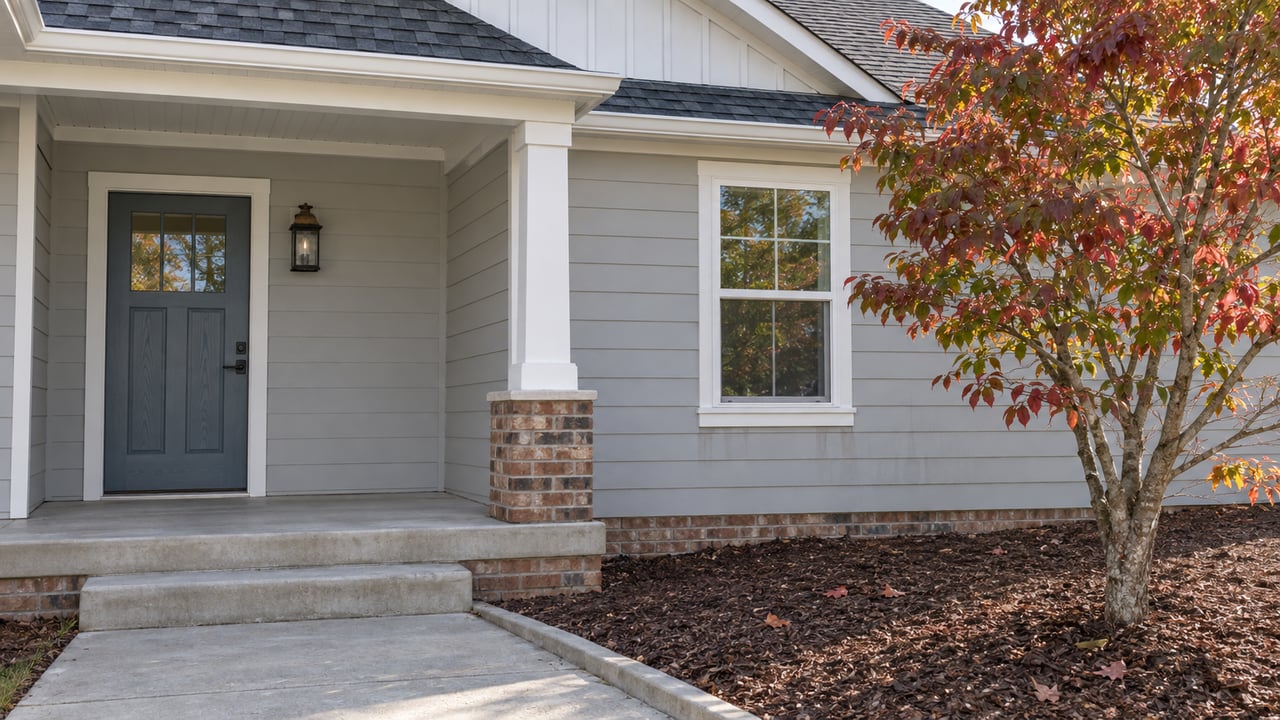
The fall 2026 Free Tree ReLeaf is on Saturday, October 24. EPB, the City of Chattanooga and Reflection Riding Arboretum & Nature Center run it together, and it has two pickup sites. One of them is Reflection Riding's own campus at 400 Garden Road, Chattanooga 37419. Pickup there starts earliest, and it can keep going after giveaway day. The nursery that hands out the trees also stays open for native plant shopping until November 21. For households near Garden Road, that turns a one-morning rush into a fall planting season that lasts the rest of the fall.
Two pickup sites on two different clocks
| Reflection Riding | Brainerd Farmers Market | |
|---|---|---|
| Address | 400 Garden Road | 20 Belvoir Ave |
| Opens October 24 | 9 a.m. | 10 a.m. |
| Closes October 24 | Nursery hours, 9 a.m. to 4 p.m. | 1 p.m. |
| After October 24 | Leftover trees sometimes held for a few weeks | Trees available that day only |
Reflection Riding is upfront about how fast the trees can go. Some years they sell out within hours, and other years the last ones stay at the nursery for a few weeks until they find homes. The spring round gives a sense of the crowd. WDEF reported on March 14, 2026 that residents lined up for that giveaway, which had 1,000 trees and shrubs available. Brainerd closes at 1 p.m. If you miss it, you miss the giveaway on that side of town. At Garden Road, you can still check after October 24 to see whether any species are left.
Each household can take two trees. The two official pages word eligibility a little differently. Reflection Riding's event page says EPB customers or City of Chattanooga residents qualify. EPB's program page says your home must be in the EPB service area and get its electricity from EPB. Staff check eligibility on site either way, so bring something that shows your address.
Why October is the right month to plant
Fall timing isn't arbitrary. The Hamilton County Master Gardeners with UT Extension call fall the ideal time to plant trees and shrubs in Tennessee. Cooler air and soil put less stress on plants and encourage root growth. That lets a new tree get established before spring, so it's in better shape when the hot, humid summer arrives.
That rationale also explains why the extra weeks at Garden Road matter. A tree adopted on October 24 or a little after still has the cool months ahead to put down roots. Fall planting happens on a schedule, and the Garden Road pickup site gives you more room inside it.
What happens when you arrive
EPB lays out the adoption process in four steps:
- Go to Reflection Riding or the Brainerd Farmers Market.
- Staff verify your property address and recommend tree varieties based on your soil type and where you plan to plant.
- Walk the nursery or market and choose your tree, much like picking out a holiday tree on a farm.
- Staff answer your questions and help complete the adoption.
Step two is the one to prepare for. EPB tells adopters to check each species' mature size and light needs so the right plant goes in the right spot. Before you head to Garden Road, walk your yard and note where you get full sun and where you get shade, and how close each spot is to the house or driveway.
The current list from EPB
EPB's program page lists 12 options, available while supplies last:
- American Hazelnut, rated for full sun to partial shade
- Blackhaw Viburnum
- Chickasaw Plum
- Eastern Redbud
- Indigobush
- Oakleaf Hydrangea
- Red Mulberry
- Shagbark Hickory
- Sourwood
- Southern Magnolia
- Tulip Poplar
- Yaupon Holly
Mature size is where people get caught out. EPB gives the Eastern Redbud a mature size of 20 to 30 feet tall and 25 to 35 feet wide. In other words, a redbud can end up wider than it is tall, so give it plenty of room.
Reflection Riding's event page still says species details are "coming soon." It notes the giveaway always includes native trees and shrubs, mostly small trees and shrubs plus at least one large shade tree. Treat the EPB list as the current one, and expect it to shrink as the day goes on. The spring giveaway had a different mix that included chestnut oak, post oak, persimmon, blueberry, serviceberry and sweet pepperbush, so the selection changes from season to season.
The nursery keeps going until November 21
Two free trees are the start of the season, not all of it. The Native Plant Nursery is open Thursday through Saturday, 9 a.m. to 4 p.m., until the season closes on November 21. Enter through the main gates and follow the signs. To browse outside regular hours, email [email protected] to set up an appointment. Reflection Riding's Plan Your Visit page lists no admission fee. Campus access is open to everyone during Welcome Center hours, Tuesday through Saturday, 9 a.m. to 4 p.m., and donations are welcome.
There are three ways to save this fall:
- Leave the Pot Sale. Bring your own pot, bag or container and get 10% off your plant purchase. You can also move a plant into one of the nursery's paper bags at checkout.
- Membership. Members get 15% off plant purchases.
- Project ReWild. The Saturday, October 10 workshop runs 9 to 10 a.m. Participants pull invasive plants, do some native planting and get a behind-the-scenes tour of the Native Wildlife Sanctuary. It comes with a 20% nursery discount.
The public species guide was last updated September 22, 2026. It labels itself a species guide, not an inventory, and warns that availability is limited and can change. It doesn't list prices or pot sizes, so call or email if you have a particular plant in mind. The guide shows how much range the nursery covers. There are wildflowers like Common Yarrow, which reaches up to 3 feet, plus Swamp Milkweed, Purple Coneflower and Cardinal Flower. Woody picks include Pawpaw, listed at 10 to 40 feet at maturity, and American Beautyberry at 3 to 6 feet tall and 4 to 6 feet wide. Winterberry and Oakleaf Hydrangea are on the list too. For the lower layers, there are Cherokee Sedge, River Oats, Pink Muhly Grass and a Passionflower vine.
Where the plants come from
The nursery's stock has a local story behind it. Since a 2025 pilot, Hixson High School students have helped fill the Native Plant Nursery, getting hands-on horticulture experience along the way.
The next step is happening on the campus itself. On February 17, 2026, Reflection Riding staff did a prescribed burn at Sheets Sward to hold back invasive plants and thin out some native plants that had taken over. Staff spotted Shortleaf Pine seedlings almost as soon as the fire was lit. The species has declined across much of its historic range, and it is well adapted to fire. The burn was also the first step in preparing a "mother garden" on a small part of Sheets Sward. There, the nursery plans to grow plants from seed collected at sites in the same ecoregion. Plants grown that way are better adapted to the local climate, soils and wildlife.
You can also add to what's known about the campus. Reflection Riding is trying to catalog every species on its 300-plus acres through iNaturalist. So far, more than 750 people have helped record more than 2,600 species.
The spider on your porch this month
Fall yard work in October will likely turn up Joro spiders. Reflection Riding's September 16, 2026 article describes the Joro as an invasive species from East Asia that was introduced to the U.S. around 2014 and is spreading across the Southeast. The article cites a study that compared the stomach contents of more than 200 Joros from 33 sites in Georgia and South Carolina with those of more than 140 native orb-weavers. The diets were significantly different. The researchers found no Monarchs or other butterflies in the Joros, and the native spiders' diets didn't change where Joros were present.
The timing overlaps with planting season. Joros lay egg sacs from mid-October into November, with roughly 400 to 500 eggs in each, and the eggs hatch in April or May. Reflection Riding suggests leaving them alone for now. If you'd rather not have them around, the article recommends removing the spiders with a broom and skipping broad-spectrum insecticide, since no spray kills only spiders. Bug killer also wipes out beneficial insects like ladybugs, green lacewings, praying mantises, parasitic wasps and hoverflies. You can report sightings on iNaturalist, by email to the University of Tennessee's Joro project, or through JoroWatch.
October on Garden Road
- Saturday, October 10, 9 to 10 a.m. Project ReWild workshop, which includes the 20% nursery discount.
- Friday, October 16. Campfire Concert with Donna the Buffalo. Gates open at 5:30 p.m. and the music starts at 6:30 p.m.
- Saturday, October 17, 2 to 3:30 p.m. Woodland Walk with Lead Naturalist Paul Earle.
- Saturday, October 24, starting at 9 a.m. Free Tree ReLeaf, two trees per household.
- Saturday, November 21. Last day of the Native Plant Nursery's fall season.
Reflection Riding notes that severe weather can cancel outdoor events, so check the event page before you go.
Our family at Bridge City Realty keeps track of dates like these because they shape everyday life for our Chattanooga neighbors. If you're working out where a new redbud or magnolia should go, or how this fall's planting fits your longer-term plans for the property, we're happy to talk it through.